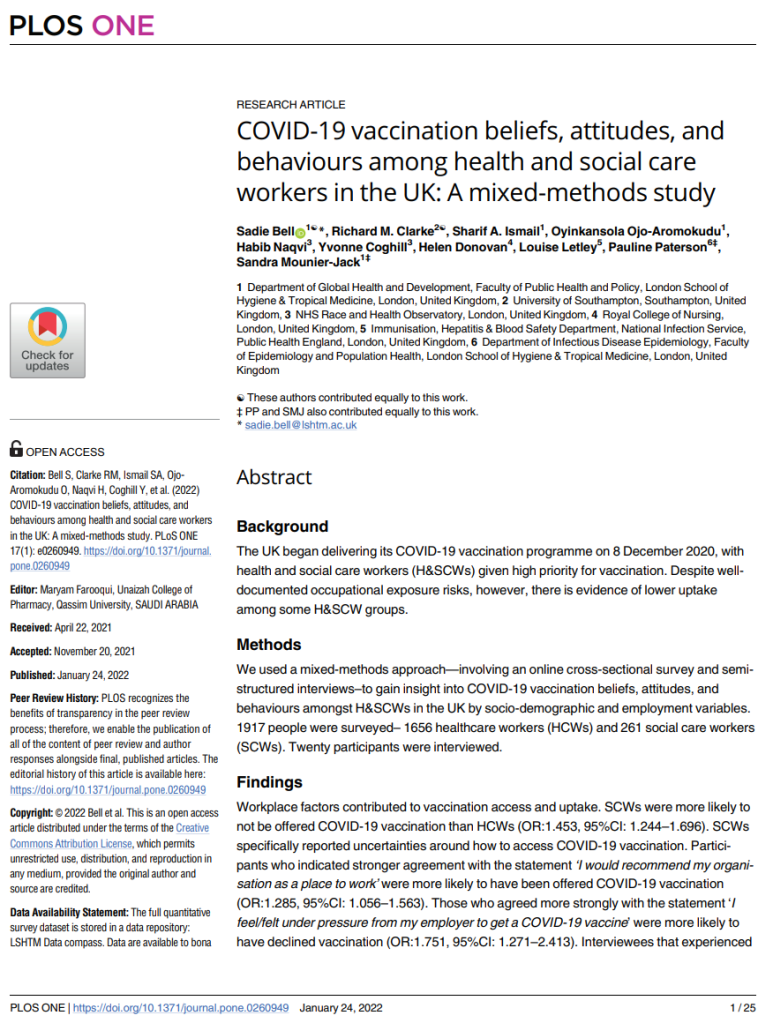
When the first COVID-19 lockdown began in England, there was growing concern that routine childhood vaccinations might quietly fall by the wayside. Messages such as “stay at home” and “protect the NHS” were essential for controlling the pandemic, but we were worried about an unintended consequence: parents being unsure whether routine childhood vaccinations were still going ahead, or feeling anxious about attending GP practices. The aim of this study was simple but urgent: to understand how parents and guardians were experiencing access to routine childhood vaccinations during the earliest phase of the pandemic, and what barriers were getting in the way.
To do this, we used a multi-methods approach, combining a large online survey with follow-up interviews. Over 1,200 parents and guardians of children aged 18 months or undertook part in the survey during April–May 2020, right in the middle of the first lockdown. We then conducted in-depth telephone interviews with a smaller group to explore their experiences in more detail. The study was framed by the COM-B model of behaviour change, which helped us think systematically about parents’ capability (knowledge and understanding), opportunity (practical access), and motivation to vaccinate.
We found that most parents strongly believed that vaccinating their children on time was important, even during a pandemic. However, many faced practical and informational barriers that made this harder than it should have been (admin! It’s always admin!). These included confusion about whether vaccination services were still running, difficulties booking appointments, cancelled or unclear reminders, and fears about catching COVID-19 when attending GP practices. Importantly, these challenges were not evenly distributed. Parents from lower-income households and from minoritised ethnic backgrounds were significantly less likely to be aware that routine vaccinations were continuing.
The key message from the study is that motivation wasn’t the problem, the systems and communication were. When parents did attend appointments, they often reported feeling reassured by the safety measures in place. The findings pointed to clear, actionable solutions: consistent national messaging, proactive invitation and reminder systems, and transparent communication from GP practices about what to expect. These lessons matter not only for COVID-19, but for future public health emergencies where maintaining routine care is essential. The full paper sets out these findings and recommendations in detail.
Bell, S., Clarke, R., Paterson, P., & Mounier-Jack, S. (2020). Parents’ and guardians’ views and experiences of accessing routine childhood vaccinations during the coronavirus (COVID-19) pandemic: A mixed methods study in England. PloS one, 15(12), e0244049.
 Richard M Clarke (PhD)