This study was a nightmare, the survey was hosted on LimeSurvey (which remains one of the least intuitive platforms I’ve ever used), suffered badly from survey bloat, and had zero analysis plan going in. Recruitment was a constant struggle, which led to some frantic learning about web-scraping email addresses and then more frantic learning about GDPR rules. I accidentally miss-emailing about 500 people in Yorkshire with the wrong details thanks to a mail-merge fail. All of this happened during the pandemic, when everything already felt stressful and uncertain. The fact that a solid, publishable paper came out of it at all still feels like a small miracle. My supervisors Nick and Merlin, who were genuinely excellent throughout a very tough period of the pandemic.
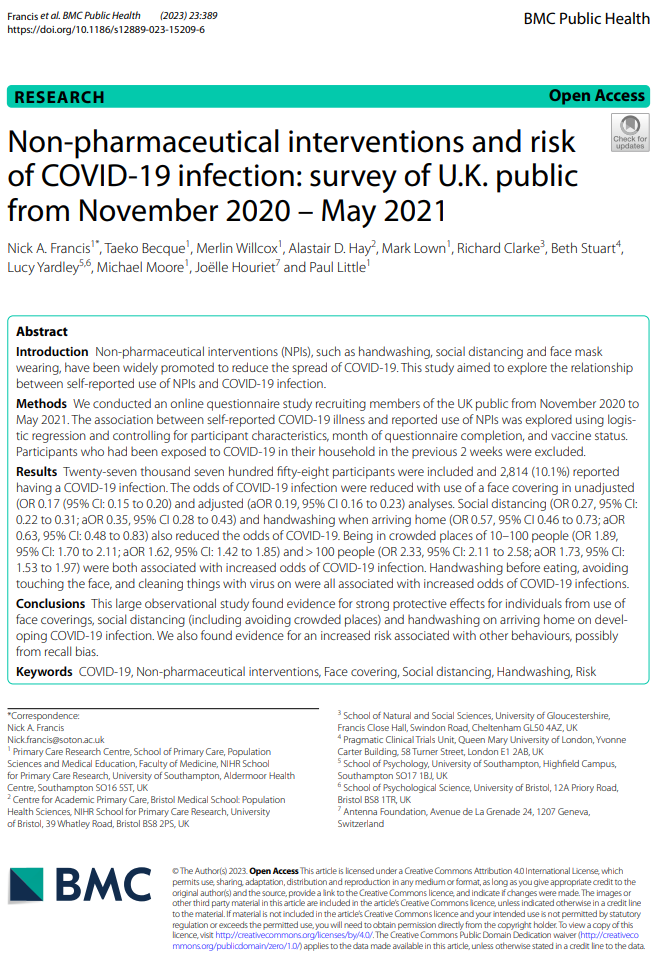
The paper looked at whether everyday behaviours people were encouraged to adopt during the pandemic. Were things like wearing face coverings, social distancing, handwashing, and avoiding crowds actually linked to a lower risk of reporting COVID-19 infection? Using a very large UK survey collected between late 2020 and mid-2021, we found pretty clear patterns: people who reported wearing face coverings, keeping their distance from others, avoiding crowded places, and washing their hands when they got home were less likely to report having had COVID-19. Other behaviours that were heavily promoted at the time (like cleaning surfaces or avoiding touching your face) didn’t show the same protective pattern, which likely reflects a mix of recall bias and the messy reality of self-reported data.
Read the full open access paper here: Francis, N. A., Becque, T., Willcox, M., Hay, A. D., Lown, M., Clarke, R., … & Little, P. (2023). Non-pharmaceutical interventions and risk of COVID-19 infection: survey of UK public from November 2020–May 2021. BMC Public Health, 23(1), 389.
 Richard M Clarke (PhD)